🧢 Beautiful ✨ Detailed πŸ’ Adorable

Watermelon Coleus Pattern

Watermelon Coleus Pattern
4.3β˜… Rating
5-7 Hours Time Needed
4.1K Made This
βœ‚οΈ

Intermediate Level

Ideal for those with basic crochet experience, featuring slightly more advanced stitches and techniques to expand your skills.

⏱️

Weekend Treat

Takes 5-7 hours, making it an enjoyable project to finish over a couple of days.

🏑

Cozy Accent

A warm touch for your space that transforms ordinary corners into inviting nooks filled with handmade charm.

About This Watermelon Coleus Pattern

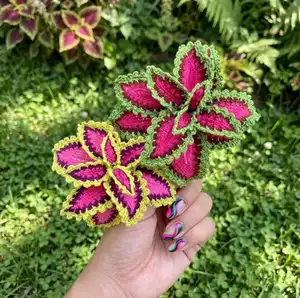
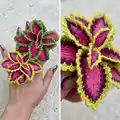
This pattern teaches you how to crochet a realistic Watermelon Coleus plant made of individual leaves worked with long stitches and a decorative border. You will work over florist wire to create shape and structure and learn a few custom long stitch variations. The design uses 3ply crochet cotton and small hooks to achieve detailed texture and crisp leaf definition.

Watermelon Coleus Pattern crochet pattern - detailed view of completed project

Instructions include yarn choices, wire insertion, and step-by-step rounds for each leaf type with photos. Make a potted display by assembling multiple leaves into a full plant.

Why You'll Love This Watermelon Coleus Pattern

I absolutely love this pattern because it transforms simple crochet stitches into lifelike botanical leaves that feel almost sculptural. I enjoy the creative challenge of combining long stitches with wire to shape each petal just the way I want it. The finished plant makes a stunning, low-maintenance piece of decor that always sparks compliments. Sharing this pattern lets me pass on the joy of making realistic flora by hand.

Watermelon Coleus Pattern step 1 - construction progress Watermelon Coleus Pattern step 2 - assembly progress Watermelon Coleus Pattern step 3 - details and accessories Watermelon Coleus Pattern step 4 - final assembly and finishing

Switch Things Up

I love how this pattern adapts to many styles: try pastel yarns for a soft, modern tabletop accent or bold jewel tones for dramatic contrast.

To make a miniature keychain version, use a finer cotton and a 0.9–1.25mm hook and shorten the wire to fit inside a keychain loop.

Want a larger statement piece? Use a bulkier yarn with a larger hook and thicker floral wire to scale up each leaf proportionally.

I often switch the border colour to a contrasting shade for a stained-glass effect; bright lime or gold looks striking around dark centers.

For a more natural feel, bend the wire into gentle S-curves and crimp slightly near the base to add realistic vein impressions.

I also like to add tiny embroidered veins with a darker thread through the center stitch before wrapping with floral tape.

If you prefer a potted arrangement, cluster different leaf sizes and secure them at varying heights to mimic real growth patterns.

You can create seasonal versions by adding small crocheted flowers or berries to the composition for autumn or spring displays.

Try combining this pattern with other plant patterns to make a mixed succulent bowl with varied textures and colors.

Finally, experiment with metallic or variegated threads for a decorative accent piece that catches light beautifully.

Common Mistakes & How to Fix Them

βœ— Skipping counting stitches during long stitch rounds leads to uneven spacing; count your stitches and mark the center stitch before working long sequences. βœ— Not pulling the wire tails evenly causes the leaf tip to sit crooked; thread and pull the wire round and down equally to keep symmetry. βœ— Working long stitches too tightly will bunch the edge and distort the petal shape; keep a slightly looser tension on long hdc/dc/tc to allow them to sit properly. βœ— Forgetting to change color at the correct spot makes the border look messy; follow the color-change note precisely and weave in ends neatly before continuing. βœ— Inserting wire after closing the tip can be difficult and cause damage; insert and crochet over the florist wire when instructed (approx 20"/50cm) for the cleanest result.

Watermelon Coleus Pattern

Create a realistic, decorative Watermelon Coleus plant using crochet techniques and simple wire armatures. This pattern guides you through making layered, textured leaves with long stitches and a scalloped edge for a lifelike finish. You will learn special long stitch variations and how to crochet over florist wire for shape and stability. Perfect for gifting, home decor, or a creative project to sharpen your crochet skills.

Intermediate 5-7 Hours

Materials Needed for Watermelon Coleus Pattern

β€” Main Fabric

  • 01
    DMC Petra no5 crochet cotton (3ply) - main colors for Plant 1: 53607, 5550, 53803
  • 02
    DMC Petra no5 crochet cotton (3ply) - accent/darker color for Plant 2: 5938
  • 03
    DMC Petra no5 crochet cotton (3ply) - leaf edge greens: 5907 and 5905
  • 04
    Small amounts of contrasting colors for inner and outer leaf tones - adapt quantity by number of leaves made

β€” Tools Required

  • 01
    Crochet hook size 1.5mm
  • 02
    Recommended yarn: 3ply crochet cotton (DMC Petra no5)
  • 03
    Alternative yarn: 4ply or crochet cotton 10 with appropriate hook size
  • 04
    Garden wire: 2mm, 3mm or 3.5mm (stem) - optional (3.5mm used in sample)
  • 05
    Florist wire (approx 20"/50cm per leaf to crochet over)
  • 06
    Green floral tape
  • 07
    Styrofoam or dry florist sponge for potting
  • 08
    Small plant pot
  • 09
    Pebbles or soil to cover foam
  • 10
    Scissors
  • 11
    Yarn needle for sewing and weaving ends
  • 12
    Pins for assembly (optional)

Progress Tracker

0% Complete

β€” Pattern Notes :

Info :

Notes: When you see stitches in brackets, it means that all the ones in the bracket are worked in to one stitch. Example: (sc inc) means: 2sc worked in to one stitch. (3sc) means: 3sc in the same stitch. (3sc) x 2 means: 3sc in each of the next 2 stitches. Alternate (dc inc) and 1dc x 3 means: work 2dc in to the first stitch, then work 1dc in the next, then repeat the last 2 steps 2 more times.

Info :

Following the tutorial and using the recommended yarn, your finished plant will measure approx. 7"(18cm) tall without plant pot and 9"(23cm) in width depending on how you shape the leaves. This plant is made of 12 leaves in total as shown in the image. You can make it larger by making more leaves or smaller by making less leaves.

β€” Leaf A :

Round 1 :

Ch25. Skip1. 2sc. 1hdc. 1dc. (dc inc) x 2. 9dc. 4hdc. 3sc.

Round 1 continued :

(3sc) in the last chain. 3sc. 4hdc. 9dc. (dc inc) x 2. 1dc. 1hdc. 2sc.

Round 1 finish :

(3sc) in the skipped chain from the beginning.

Round 2 :

2sc. 2hdc. 1dc. (dc inc). (1dc, 1tc). 1tc. (tc inc). repeat the last 2 steps 1 more time. 3tc. 4dc. 4hdc. 3sc.

Round 2 continued :

(3sc) center stitch. Going down the other side: 3sc. 4hdc. 4dc. 3tc. (tc inc). 1tc. repeat the last 2 steps 1 more time. (1tc, 1dc). (dc inc). 1dc. 2hdc. 3sc. slst base chain.

Info :

Change colour at the end of this round as instructed in the pattern when prompted.

Round 3 :

ch1. 8sc. (sc inc). 1sc. repeat the last 2 steps 2 more times. 17sc.

Round 3 detail :

Work all the following stitches in to the center stitch at the tip of the leaf: (1hdc, ch4, skip1, 1sc, 1hdc down the chain, 1hdc). Pull the wire round and down equally.

Round 3 finish :

17sc. 1sc. (sc inc). repeat the last 2 steps 2 more times. 8sc. Slst in 1st stitch on the opposite side. CHANGE COLOUR.

Round 4 :

ch1. 4sc. 1hdc.

Round 4 explanation :

Long stitch explanation: In this round a few unusual stitches are used called the Long hdc, the Long dc and the Long tc. Each long stitch sequence comes as a sequence of one normal stitch followed by the Long stitch. For example (1hdc, 1Long hdc), (1dc, 1Long dc) and (1tc, 1Long tc). There will be approximately 2 stitches between each long stitch on the previous round in between each long stitch (see photos).

Round 4 sequence :

Work the first long stitch sequence: 1hdc, Yarn over as to work another hdc but don't work it in to the next chain. Instead insert the hook in to the round below (underneath the wire round) and 1 stitch back. Pull the yarn through as you would usually do and pull the long stitch up and complete the long hdc the same as you would usually do. So now you have done this sequence: (1hdc, 1Long hdc). In the next chain work 1slip stitch. This chain may be hidden under the Long stitch so check the slip stitch is worked in to the correct chain.

Round 4 continue :

Continue to work: 1dc (1dc, 1Long dc) Slst. 1dc (1tc, 1Long tc) Slst. Repeat 3 more times. 1dc (1dc, 1Long dc) Slst. Repeat 1 more time. 1hdc (1hdc, 1Long hdc) Slst. Repeat 1 more time.

Round 4 finish :

2sc. (3sc) center stitch.

Round 4 other side :

Going down the other side Rnd.4: 2sc. slst. 1hdc (1hdc, 1Long hdc) Repeat 1 more time. slst. 1dc (1dc, 1Long dc) Repeat 1 more time. slst. 1dc (1tc, 1Long tc) Repeat 3 more times. slst. (1dc, 1Long dc) 1dc Repeat 1 more time. slst. (1hdc, 1Long hdc) 1hdc. 5sc. slst in 1st stitch on the opposite side.

Round 5 :

ch1. 4sc. slst (in to the row below) (p1). 1sc (p2). 1hdc (p3). (hdc inc) (p4). slst (side of slst from the row below) (p1). Repeat 9 more times.

Round 5 continued :

3sc. (1sc, ch3, skip1, 1sc, 1sc) Center stitch. Going down the other side: 3sc. slst (side of slst) (hdc inc) 1hdc 1sc. Repeat 9 more times. slst (row below). 5sc. Change color.

Round 6 :

ch1. 4sc. Now work 1dc next to the slip stitch from the previous round. Push the hook in at the side of the slst we made in the previous round, pull the yarn up and complete the dc (p1). This stitch is repeated all around the petal where the slip stitches from the previous round are.

Round 6 continue :

Continue to work: 1hdc (p2). (sc dec) (p3). 1hdc (p4). 1dc (side of slst) (p1). Repeat the last 4 steps 9 more times. 3hdc. 2sc.

Round 6 finish :

Work (3sc) in to the unworked skipped chain at the tip of the petal. Going DOWN the other side: 2sc. 3hdc. 1dc (side of slst). 1hdc. 1hdc (sc dec) 1hd 1dc (side of slst). Repeat 9 more times. 5sc. Slst in the 1st chain on the opposite side.

Round 7 :

(ch1, 1sc) 7sc. (slst, ch2, 1dc, ch1). (1dc, ch2, slst). 2slst. Repeat the last 4 steps 10 more times.

Round 7 continued :

(1dc, 1tc, ch1, slst, 1dc) center. Going down the other side: 2slst. (slst, ch2, 1dc, ch1). (1dc, ch2, slst). Repeat the last 4 steps 10 more times. 8sc. Leave a long tail. Wrap tight around the wire to cover approx. 2"(5cm).

β€” Leaf A Wire :

Info :

We will now crochet over the florist wire. Cut a piece of approximately 20"(50cm) and thread it through the stitch on your hook (p1 & p2). Crochet this whole next round over the wire (p3).

β€” Leaf A continued - Long Stitch Details :

Info :

Long stitch explanation: The Long hdc, Long dc and Long tc are worked by starting a normal stitch then inserting the hook in to the round below (underneath the wire round) slightly diagonal from the last stitch, pulling up the long loop and completing the stitch. Each long stitch follows a normal stitch in the sequence and is described in the pattern as (1hdc, 1Long hdc), (1dc, 1Long dc) and (1tc, 1Long tc).

β€” Leaf B :

Make :

Make 2.

Round 1 :

Ch20. Skip1. 2sc. 1hdc. 1dc. (dc inc) x 2. 6dc. 3hdc. 2sc.

Round 1 continued :

(3sc) last chain. 2sc. 3hdc. 6dc. (dc inc) x 2. 1dc. 1hdc. 2sc. (3sc) in the skipped chain from the beginning.

Round 2 :

2sc. 2hdc. 1dc. (dc inc) x 2. 1dc. (dc inc). 1dc. (dc inc) 3dc. 3hdc. 3sc. (3sc) center. 3sc. 3hdc. 3dc. (dc inc) 1dc. (dc inc) 1dc. (dc inc) x 2. 1dc. 2hdc. 3sc. slst in to base chain.

β€” Leaf B continued - Insert Wire :

Info :

Insert wire approx. 20"(50cm).

Round 3 :

ch1. 5sc. Alternate (sc inc) and 1sc x 3. 15sc.

Round 3 center :

(1hdc, ch4, skip1, 1sc, 1hdc, 1hdc) center stitch.

Round 3 finish :

15sc. 1sc and (sc inc) x 3. 5sc. Slst in 1st on opposite side. Change Color.

Assembly Instructions

  • Cut a piece of florist wire approx. 20"(50cm) for each leaf, thread through a stitch and crochet the next round over the wire to secure; leave long tails to wrap stems together.
  • Wrap the exposed wire tails with green floral tape and arrange leaves on a main stem, starting with the largest leaves at the base and placing smaller leaves toward the tip.
  • Prepare a plant pot by cutting styrofoam or dry florist sponge to fit the pot, insert wires into the foam starting from the centre, then place other flowers/leaves around it to build the plant.
  • Cover the top of the foam with pebbles or soil to hide the foam and secure the base; bend and shape each leaf wire to achieve a natural curve and position.
  • Use yarn needle and small whipstitches if needed to join overlapping leaf bases for a more compact cluster; adjust angles and spacing before final taping.

Important Notes

  • πŸ’‘Use stitch markers and count carefully during long-stitch rounds to maintain even spacing and correct stitch sequences.
  • πŸ’‘Crochet over florist wire while following the 'Insert Wire' step to ensure a neat, secure channel and consistent leaf shape.
  • πŸ’‘Change colours cleanly and weave in ends as you go to keep the reverse side tidy and avoid bulky joins.
  • πŸ’‘Work long stitches with a slightly looser tension so they sit above the round and do not pucker the petal edge.

This Watermelon Coleus pattern brings a burst of color and texture to your home with handcrafted crochet leaves that mimic the real plant. Each petal uses long-stitch techniques and wire shaping to achieve a realistic look. Whether as a gift or a personal project, it will brighten any shelf or desk with botanical charm. 🌿🧢

You ask,

we answer.

FAQs

What size will the finished piece be?

The finished plant measures approximately 7" (18 cm) tall and 9" (23 cm) wide using the recommended yarn and 1.5mm hook, depending on how you shape the leaves.

Can I use a different yarn weight for this pattern?

Yes, but this will affect the final size; use appropriate hook sizes for thicker or thinner yarn and expect changes in leaf size and texture.

Do I need any special skills to make the long stitches?

The pattern is intermediate level; long hdc/dc/tc are explained step-by-step and include photos, but familiarity with hdc/dc/tc basics is recommended.

How do I secure the leaves in a pot?

Insert wires into styrofoam or dry florist sponge inside a pot, arrange leaves starting from the center outwards, then cover the foam with pebbles or soil for a finished look.