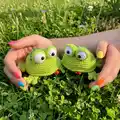
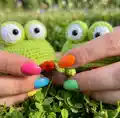
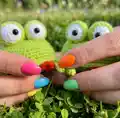
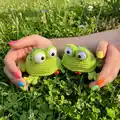
About This Little Frog Amigurumi Pattern
This pattern teaches you how to crochet a tiny frog amigurumi with separate pieces for belly, back, eyes, eyelids, paws and tongue. It includes step-by-step rounds worked in spiral, clear stitch counts, and photo references for assembly. The frog is made with cotton DK yarn and a 2.0 mm hook, producing a compact 7 cm finished toy. Detailed assembly and finishing notes ensure a neat, professional result.
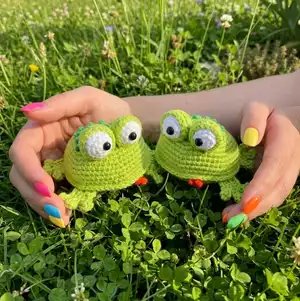
Designed for crocheters who enjoy small, detailed amigurumi projects with charming results. The pattern includes notes on stitch techniques, materials, and decorating the frog with French knots or beads.
Why You'll Love This Little Frog Amigurumi Pattern
I absolutely love this pattern because it creates such a charming little frog with simple components that come together beautifully. I enjoy working on small projects that finish quickly and still allow for cute details like eyelids, a tiny tongue, and back spots. The mix of working in spirals and the decorative French knot finishing makes the process satisfying from start to finish. I also appreciate that it uses everyday cotton DK yarn and a small hook, so the final toy has a lovely firm texture.
Switch Things Up
I love how easy it is to change the personality of this little frog by swapping colors, so try pastel greens or even mint and cream combinations for a softer look.
If you want a bigger frog, use a thicker yarn and a larger hook; bulky yarn will give you a plush, chunky frog while sport weight will make a smaller, finer version.
I often add tiny felt spots or embroider small hearts on the belly for a special gift-ready touch—you can sew or glue these on as you prefer.
Try using safety eyes for a durable toy, or embroider eyes for a fully washable, child-safe version; both give different expressions to the frog.
Swap the puff stitch on the paws for small crochet bobbles or little picot toes to change the texture of the feet.
For a seasonal twist, crochet the tongue in different colors or add a tiny crochet bow or scarf to dress your frog up for holidays.
I sometimes add a small loop at the top to turn the frog into a keychain or ornament—just leave a longer tail and create a small ring with a few chains.
Play with stuffing firmess: slightly less stuffing gives a flopier, squishier toy while firmer stuffing creates a more structured shape.
Add wire in the limbs if you want posable front legs; insert thin wire and wrap it well before sewing limbs closed so it stays hidden and safe.
I enjoy mixing yarn types for tactile contrast—try a cotton body with a tiny brushed yarn accent for a fuzzy tongue or spots.
Common Mistakes & How to Fix Them
✗ Crocheting with loose tension can create gaps where stuffing shows through; use a smaller hook and maintain tight stitches to avoid holes.
✗ Forgetting to leave long tails for sewing the eyes and eyelids makes assembly difficult; cut threads long enough and secure them as you go for easier placement.
✗ Not stuffing the body gradually can lead to lumps or uneven shaping; stuff a little at a time while joining the belly and back to get an even shape.
✗ Misplacing the eyes too low or too high will affect the frog s expression; use pins to position eyes between the 4th and 8th rows before sewing.