About This Indigo Coat Pattern
This pattern creates a one-size Indigo Coat worked in stocking stitch with a decorative garter stitch border band. It is designed for James C. Brett Marble DK yarn and features clear schematics for shaping and measurements. The coat offers an oversized, layered silhouette with deliberately placed twists at each corner of the border.
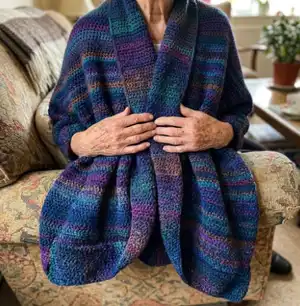
Included are full instructions for Front Right, Front Left, Back panels and the long Border Band. Abbreviations and schematics are provided for easy reference while knitting.
Why You'll Love This Indigo Coat Pattern
I absolutely love this pattern because it transforms simple stocking stitch into a sophisticated, roomy coat that feels both modern and timeless. I enjoy how the long border band with corner twists gives the coat a distinctive finish without complicated stitches. The pattern is thoughtfully written with schematics and row counters so I can follow shaping precisely every step of the way. Making this coat lets me experiment with self-striping or variegated DK yarn to beautiful effect.
Switch Things Up
I love experimenting with colourways for this coat; try substituting the Marble DK for a hand-dyed DK to get unique variegation and longer or shorter colour pooling effects.
To make the coat smaller or larger, adjust needle size and make a test swatch to calculate the new stitch counts for the panels and border band.
I often change the border band length to make a shorter open cardigan version; reduce the W to measurements proportionally and keep MK twist points at equivalent proportions.
Want pockets? I usually pick up stitches on the inside of the front panels and knit a small pocket rectangle, then seam it in before joining side seams.
Try substituting a solid DK for a more subtle, classic look, or contrast the border band colour for a bolder edge detail.
I sometimes add a narrow facing or lining to the border band for extra structure and warmth; hand-sew a lightweight lining to the inside after joining.
For added texture, replace part of the border band with a slipped-stitch or seed stitch panel while keeping the rest garter stitch, but maintain the MK twist points.
If you want more drape, use a slightly larger needle for the body while keeping the border band on the recommended needle to retain a crisp edge.
I like to add small embroidered motifs or subtle surface embroidery along the front left panel to personalize the coat once knitted and blocked.
For a more structured shoulder, pick up and knit a short provisional stitch band at the shoulder seams and graft them after blocking for a cleaner shoulder join.
Make a version with a collar by lengthening the border band at the center back and shaping a folded collar section; this adds warmth and a different silhouette.
If you prefer buttons, add buttonhole placement notes along one front edge before stitching the border band down so the buttonholes sit neatly within the band.
Common Mistakes & How to Fix Them
✗ Skipping the recommended sample swatch can lead to incorrect sizing and improper drape; always knit a 10 cm square in stocking stitch and adjust needle size to match the gauge.
✗ Failing to mark corners and twist points when making the border band can cause misalignment at joins; use waste yarn markers (MK) exactly as instructed to match twists with coat corners.
✗ Ignoring row counters or failing to record row counts will make shaping inaccurate; use a row counter and note Rc numbers to follow armhole and shoulder shaping correctly.
✗ Joining the border band without twisting at the corners results in a floppy or uneven edge; when you reach each corner, twist the band over and continue the seam on the opposite side as directed.
✗ Uneven tension between stocking stitch body and garter border can cause pulling; maintain consistent tension and block gently if necessary to even out edges.