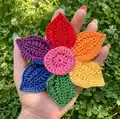
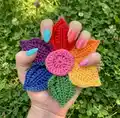
About This Flower Coasters Pattern
These Flower Coasters are made by holding two strands of DK weight yarn together to create a textured, sturdy coaster with a lovely floral petal edge. The pattern is written in UK crochet terms and includes full round-by-round instructions and stitch counts. Each coaster measures approximately 12cm in diameter using the recommended yarn and hook. They make colourful stash-busting projects and fantastic handmade gifts.
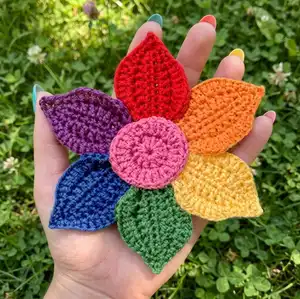
The pattern uses simple trebles, half trebles and fan stitches to create petals. A magic circle start and a neat finish are described for tidy results.
Why You'll Love This Flower Coasters Pattern
I absolutely love this pattern because it turns small scraps of yarn into something bright and useful that you can enjoy every day. I enjoy the simple rhythm of the rounds and how quickly each coaster grows into a pretty flower. The technique of holding two strands together adds a lovely tweedy texture that really makes colours pop together. It is a satisfying, quick project that I like to make in sets to gift or use around the house.
Switch Things Up
I love experimenting with different colour pairings when I make these coasters; try high-contrast colours for a bold look or soft pastels for a subtle set.
You can change the size by switching yarn weight or hook size—using thicker yarn and a larger hook will give you a bigger, chunkier coaster.
I sometimes use a neutral strand (white, cream or grey) held with a bright colour to create a tweedy or 'stained glass' effect that tones down bright hues.
For a more rustic look, try holding a DK strand with a lighter-weight yarn to add texture and softness to the final fabric.
If you want extra durability, make a second coaster and sew them together around the edge for a thicker, reversible piece.
I often embroider a small centre motif or sew on a button in the middle for added detail and personalization.
Try changing the petal shape by adjusting the petal round; for example, reduce the number of treble stitches in each petal to make smaller, tighter petals.
You can join coasters together to make a table runner—feel free to experiment with spacing and colour repeats to create patterns.
If you prefer a different finish, use an alternative join method described in the pattern (Invisible Join or slip stitch) to get the look you like.
I like to block my coasters lightly after finishing to flatten the petals—just wet lightly and pin flat to dry for the neatest finish.
Common Mistakes & How to Fix Them
✗ Not holding two strands together tightly can make the coaster uneven; hold both strands together with consistent tension throughout to keep stitches even.
✗ Skipping the magic circle step can leave a gap in the center; close the magic circle tightly or use the ch4 slst ring alternative to secure the center.
✗ Forgetting that ch2 counts as the first treble can throw off stitch counts; always count the ch2 as 1 tr at the start of each round.
✗ Turning the work when the pattern instructs not to can distort the stitch orientation; follow 'Turn work' and 'Do not turn work' notes exactly for correct shaping.