🧢 Beautiful ✨ Detailed πŸ’ Adorable

Basic Sock Guide Pattern

Basic Sock Guide Pattern
4.0β˜… Rating
5-7 Hours Time Needed
2.4K Made This
βœ‚οΈ

Intermediate Level

Ideal for those with basic crochet experience, featuring slightly more advanced stitches and techniques to expand your skills.

⏱️

Weekend Treat

Takes 5-7 hours, making it an enjoyable project to finish over a couple of days.

🧦

Snug Essential

Everyday comfort with practical charm, designed for both functionality and style through changing seasons.

About This Basic Sock Guide Pattern

This pattern guide teaches you how to knit socks using 4-ply, 6-ply and 8-ply sock yarn, with full instructions for ribbing, leg length, two heel variations and toe shaping. It includes tension guidance, size charts and clear step-by-step row instructions so you can achieve a great fit. The guide is practical and adaptable so you can customize length and heel style.
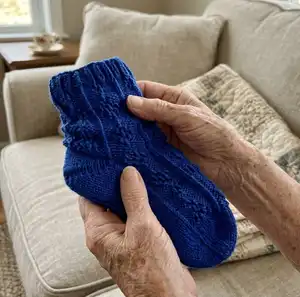
Basic Sock Guide Pattern crochet pattern - detailed view of completed project

Youll find both short-row heels and a cap-and-gusset heel method with pickup instructions for a neat gusset. Detailed notes on tension, swatching and finishing ensure your socks come out the right size and shape.

Why You'll Love This Basic Sock Guide Pattern

I absolutely love this pattern because it covers essential sock techniques in a clear, usable way and gives you options for different heels and fits. I enjoy how the guide balances technical detail with simple, practical tips so you can adapt the pattern to your yarn and size. I also love that it includes size charts and tension notes so youre more likely to get the right fit first time. Finally, the pattern inspires me to experiment with colors, ribs and lengths to make socks as unique gifts.

Basic Sock Guide Pattern step 1 - construction progress Basic Sock Guide Pattern step 2 - assembly progress Basic Sock Guide Pattern step 3 - details and accessories Basic Sock Guide Pattern step 4 - final assembly and finishing

Switch Things Up

I like to change yarn weights and needles to create different sized socks; swap to 6-ply or 8-ply for thicker, warmer socks and adjust the needle size accordingly.

I often vary the ribbing: try a 2x2 rib for a classic cuff or a 1x1 rib for a closer fit around the ankle.

Change the leg length to make anklets, crew socks or knee socks by working more or fewer rounds before starting the heel.

Try colorwork or stripes on the leg and foot sections for fun designs; carry colors loosely or use jogless stripe techniques to avoid gaps.

For a reinforced sole, knit a duplicate stitch reinforcing layer or use a tighter gauge on the sole stitches while keeping the rest of the sock at the pattern gauge.

I sometimes add a contrast toe and heel to give socks a modern, playful look while following the same shaping instructions.

Consider using a circular needle with magic loop instead of DPNs if you prefer that method for working small circumferences.

Embellish socks with simple eyelet patterns or slipped-stitch textures for extra interest without changing the shaping or size.

For children or tiny sizes, use finer yarn and smaller needles and reduce the cast-on per the charts to create perfectly fitting small socks.

Make matching sets by using the same yarn but varying cuff height and heel style so each pair has a unique detail while still matching.

I also experiment with adding a short i-cord at the cuff for a decorative finish that helps the sock stay up comfortably.

Try making half pairs as samples to test heel options and gauge before committing to a full pair; this saves time and yarn while you decide on preferences.

Common Mistakes & How to Fix Them

βœ— Not checking the gauge before beginning; make a swatch and adjust needle size so the finished socks match the pattern measurements. βœ— Failing to place the beginning of the round at the centre back of the sock; mark the centre back with a stitch marker to keep pattern alignment consistent. βœ— Ignoring the wrapped stitch technique during short-row heels; take time to wrap and pick up wraps correctly to avoid holes in the heel. βœ— Pulling yarn too tightly when closing the toe; thread yarn through remaining stitches and pull gently to avoid distorting the toe shaping. βœ— Skipping the step to work both parts of wrapped stitches as one stitch; this will alter stitch counts and ruin the heel shaping.
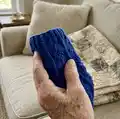
Basic Sock Guide Pattern

This comprehensive sock guide walks you through knitting socks using 4-ply, 6-ply and 8-ply sock yarn. Youll learn ribbing, two heel options (short rows and cap-and-gusset), foot shaping and toe finishing with clear, practical instructions. Perfect for expanding your sock-knitting skills and creating comfortable, custom-fit socks.

Intermediate 5-7 Hours

Materials Needed for Basic Sock Guide Pattern

β€” Main Fabric

  • 01
    4-ply sock yarn (4-fach), tension/gauge: 30 sts x 40 rows = 10 cm x 10 cm (recommended needles 2.5 - 3.0 mm)
  • 02
    6-ply sock yarn (6-fach), tension/gauge: 22 sts x 30 rows = 10 cm x 10 cm (recommended needles 3.0 - 4.0 mm)
  • 03
    8-ply sock yarn (8-fach), tension/gauge: 20 sts x 28 rows = 10 cm x 10 cm (recommended needles 4.0 - 5.0 mm)
  • 04
    Sock yarn in contrasting or matching colors as desired for sets, quantities depend on shoe size and yarn weight (see size charts for stitch cast-on and foot length guidance)

β€” Tools Required

  • 01
    4 double pointed needles (DPNs) or equivalent small-circumference needles, sizes as recommended per yarn (2.5-5.0 mm depending on ply)
  • 02
    Stitch markers
  • 03
    Tapestry/darning needle for weaving in ends
  • 04
    Scissors
  • 05
    Tape measure or ruler for swatch and foot length
  • 06
    Waste yarn for holding stitches (optional)

Progress Tracker

0% Complete

β€” Instructions for socks :

Info :

(Example: Hot Socks 4-ply, shoe size 42/43)

β€” Ribbing and leg :

Info :

Cast on the amount of stitches as indicated in the chart for the size needed (for example 64 stitches) and divide the stitches evenly amongst the 4 double pointed needles (16 per needle). Work in rounds with the beginning of each round at the centre back of the sock.

Info :

Ribbing: Knit 1, purl 1 or knit 2, purl 2; rep to end of round. Continue this round until desired ribbing height is achieved.

Info :

Leg: knit all stitches

Info :

Work ribbing and leg to approximately 20 cm in height.

β€” Heel with 2 variations :

Info :

The pattern provides two heel options: A) Heel with short rows and B) Heel with cap and gusset. Both are worked over the stitches on the 1st and 4th needles (32 stitches) with other needles held as needed.

Item Name (A1) :

A) Heel with short rows The heel is worked over the stitches on the 1st and 4th needle (32 stitches). Place these stitches on one needle and work in rows.

Round 1 :

Row 1: knit all sts to end. Turn.

Round 2 :

Row 2: work 1st stitch as a wrap stitch: with yarn in front, insert needle from the right into the next stitch knit-wise then slip stitch with the yarn together and pull stitch tight taking the yarn to the back of work. This forms a wrap stitch. Purl rest of row. Turn.

Round 3 :

Row 3: Work 1st stitch as a wrap stitch, knit to end of row until wrapped stitch. Turn. (The wrapped stitches remain unworked on the needle).

Round 4 :

Row 4: Work 1st stitch as a wrap stitch, purl all stitches to wrapped stitch. Turn.

Infos :

These last two rows establish the pattern. Work continuously until only the centre third remains. (Each side 12 wrapped stitches and 8 sts in the centre).

Round :

Next round: Now work 2 rounds over all stitches on all needles working both parts of the wrapped stitches as for one stitch.

Round :

Next round: knit to end of 3rd needle. Then continue only over the heel stitches in rows. (32 stitches)

Round 1 :

Row 1: Knit the sts of the side third panel (see chart: 11 stitches) and the stitches for the centre third panel (see chart: 10 stitches). Turn.

Round 2 :

Row 2: Work a wrap stitch, purl following stitches to last stitch of panel. Turn.

Round 3 :

Row 3: Work a wrap stitch, knit all sts to wrap stitches and work 1 wrap stitch as a knit stitch. Knit remaining side third panel. Turn.

Round 4 :

Row 4: Work a wrap stitch, now purl all stitches until the wrap stitch and work 1 wrap stitch as a purl stitch. Purl remaining panel. Turn.

Round :

Repeat rows 3-4 continuously until all stitches are working. Then work foot in rounds until beginning of toe.

Item Name (B1) :

B) Heel with cap and gusset The heel is worked over the 4th and 1st needle (32 stitches) in rows in stockinette stitch (right-side rows knit all stitches and wrong-side rows purl all stitches). Place all stitches for the heel on one needle and knit the 2nd and 3rd stitch as well as the 2nd and 3rd last stitch in each row. The stitches on the 2nd and 3rd needle remain unworked. Work the number of rows as given in chart (30 rows). Then divide the stitches for the gusset in 3 (see chart). In our example 11 stitches on each edge and 10 stitches in the centre for the cap.

Round :

Next right-side row: knit the 11 outer stitches and the 9 cap stitches. *Slip the last cap stitch knit-wise, knit the 1st stitch from the outer part and slip the stitch over the cap stitch and turn.

Round :

Next row: Now slip the cap stitch purl-wise with yarn in front and purl all stitches to the last cap stitch. Purl this last stitch with the following stitch on the outer panel together. Turn.

Round :

Slip the 1st cap stitch knit-wise and knit all cap stitches to end of row. Turn.

Round :

Continue from * until all stitches have been worked and only the centre cap stitches (10 stitches) remain.

Round :

Continue in rounds over all stitches. The beginning of the round is in the centre of the cap stitches.

Item Name (B2) :

1st Needle: With right side facing, pick up half of the number of cap stitches (5 stitches) plus the amount given in chart (16 stitches) along the side edge of the heel.

Item Name (B3) :

2nd and 3rd Needles: knit all stitches.

Item Name (B4) :

4th Needle: pick up half the number of cap stitches as given in chart (16 stitches) plus half of the cap stitches (5 stitches).

Round :

Then work the gusset as follows: The 1st and 4th needles have more stitches than on the 2nd and 3rd needles. These extra stitches are needed for the gusset decreases.

Round :

In the 3rd round on the 1st needle knit the 2nd and 3rd last stitches together and knit the last stitch. On the 4th needle: knit 1, slip one knit-wise, knit 1 then slip the slipped stitch over.

Round :

Continue these decreases every third row until the same amount of stitches remains on each of the 4 needles.

β€” Foot and toe shaping :

Info :

Work foot in rounds until length as given in chart is reached (= 22 cm) then begin with the toe.

Round 1 :

1st and 3rd needles: Knit the 2nd and 3rd last stitches together and

Round 2 :

2nd and 4th needles: Knit 1, slip one knit-wise, knit 1 then slip the slipped stitch over.

Round :

Continue these decreases as given in chart.

Round :

Break yarn and thread through the remaining stitches twice and pull tight. Weave in ends.

β€” Swatch :

Info :

To achieve the measurements in the patterns, it is very important to check your tension before starting your work. Make a swatch of at least 12 cm x 12 cm and double check the stitches and rows to make sure you have the same tension as stated in the pattern and if necessary change the needle size accordingly. This is the only way your work will be the size shown and the measurements, rows, stitches and yarn requirements will be correct.

Assembly Instructions

  • After finishing the toe, break the yarn and thread it through the remaining stitches twice, pull tight and secure the end to close the toe; weave in ends neatly on the inside.
  • When using the short-row heel, work the two rounds over all stitches treating wrapped stitches as one before continuing in the round; this secures the heel shaping before returning to rounds.
  • When using the cap-and-gusset heel, pick up sts along the heel edges as instructed (half cap sts plus chart sts) ensuring an even distribution on the 1st and 4th needles before working gusset decreases.
  • Place the beginning of each round at the centre back of the sock to keep pattern alignment consistent and to match chart measurements.
  • Block or lightly wash and shape the finished socks to even out stitches and help them relax into the correct size.

Important Notes

  • πŸ’‘Check your tension with a swatch before starting; changing needle size is often necessary to match the pattern gauge.
  • πŸ’‘Mark the centre back of the round to ensure correct alignment when dividing for heel and when picking up stitches for gusset.
  • πŸ’‘Work wrapped stitches and their returns carefully when doing short-row heels to avoid holes; pick up wraps together with stitches as instructed.
  • πŸ’‘Distribute picked-up stitches evenly when forming the gusset to avoid uneven joins or gaps at the heel.
  • πŸ’‘Weave in all ends securely and trim excess to prevent unraveling after wear.

This sock guide brings practical sock-knitting techniques to your needles with clear heel options and size charts for 4-, 6- and 8-ply yarn. Whether youre making cozy everyday socks or practice pairs to perfect tension, this pattern helps you achieve a great fit every time. Happy knitting and warm feet ahead! 🧢🧦

You ask,

we answer.

FAQs

What size will the finished piece be?

The finished sock size depends on your chosen shoe size from the charts; the example uses shoe size 42/43 with gauge and stitch counts provided in the tables.

Can I use different yarn weights for this pattern?

Yes, you can use different yarn weights, but you must adjust needle size and check your gauge so the finished sock matches the measurements and stitch counts in the chart.

Do I need prior knitting experience for this pattern?

This pattern is rated intermediate because it uses short rows, picked-up stitches for gussets, and working on four needles; familiarity with knit, purl, and basic decreases is recommended.

How long does this project typically take to complete?

Most knitters finish a pair of socks in about 5-7 hours depending on experience, yarn weight, and whether you choose the short-row or gusset heel method.