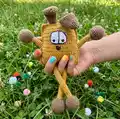
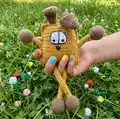
About This Woof the Dog Amigurumi Pattern
This pattern creates a stretchy little dog with long, elastic arms and legs and a soft square body. It uses simple amigurumi techniques with a clever assembly that lets limbs slide and stretch. The toy measures approximately 30 cm from ears to feet when made with the recommended yarn.
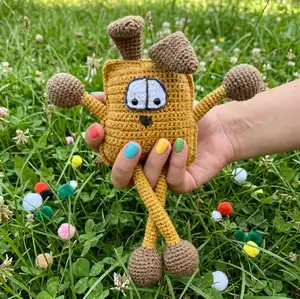
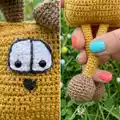
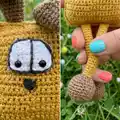
Includes step-by-step rounds for eyes, ears, limbs and the body plus assembly and decoration instructions. Photos in the pattern help you position parts and embroider facial features accurately.
Why You'll Love This Woof the Dog Amigurumi Pattern
I absolutely love this pattern because it turns basic crochet stitches into a playful, tactile toy that kids adore. I enjoy how the stretchy limbs add movement and interactive play to a classic amigurumi shape. The construction is satisfying — you crochet flat body panels and then join them to create a neat, boxy character. The design is versatile so you can easily change colors or facial expressions to create endless personalities.
Switch Things Up
I love how easily this design can be customized by changing yarn colors; try soft pastels for a baby-friendly toy or bright contrasts for a playful look.
I often swap the recommended yarn for a slightly bulkier weight and a larger hook to make a chunkier, cuddlier version of this dog.
For a tiny keychain version, use sport or fingering weight yarn and a 2.0 mm hook and reduce the body rows to make a pocket-sized friend.
I sometimes replace safety eyes with embroidered eyes for a fully baby-safe toy or to give an expressive handmade look.
Try adding tiny crocheted props like a scarf, bow, or small felt patch for personality — these little extras make great gifts.
I experiment with ear shapes by elongating or shortening the ear rounds to change the character from perky to floppy.
You can embroider different mouth shapes and nose sizes to create various expressions from surprised to sleepy or silly.
I like to add a loop inside the top seam so the toy can be hung as decor or clipped to a stroller — useful and decorative.
To make limbs poseable, consider inserting a thin craft wire inside the limb tube before stuffing; this adds posability but is not recommended for toys intended for very young children.
If you want a plushier body, add an inner lining of fleece or an extra layer of stitches before stuffing to change the texture and firmness.
Swap the brown and gold color placement to invert the palette and give your dog a whole new personality with the exact same pattern instructions.
Common Mistakes & How to Fix Them
✗ Skipping stitch markers at the start of each row can cause lost stitch counts; place a marker to mark your first stitch and move it every row to stay accurate.
✗ Overstuffing the head or limbs makes the toy look misshapen and stiff; stuff gradually and evenly, adding small amounts until you reach a firm but pliable shape.
✗ Forgetting to insert safety eyes at the specified rows results in relocated features; install safety eyes between the indicated rows before closing or continuing to avoid rework.
✗ Not stitching through both body panels when joining will leave gaps or misaligned edges; hold both panels together carefully and work the specified SC through both parts for a secure seam.
✗ Changing tension between the gold body and brown limbs can produce uneven joins; maintain consistent, moderate tension and check gauge visually as you join parts.
✗ Cutting yarn tails too short when finishing pieces makes sewing difficult; leave long yarn tails for sewing and weaving to secure parts neatly.