🧢 Beautiful ✨ Detailed πŸ’ Adorable

White Lace Sweater Pattern

White Lace Sweater Pattern
4.6β˜… Rating
12-15 Hours Time Needed
2.6K Made This
βœ‚οΈ

Intermediate Level

Ideal for those with basic crochet experience, featuring slightly more advanced stitches and techniques to expand your skills.

⏱️

Multi-Day Project

A rewarding 12+ hour journeyβ€”perfect for dedicated crafters who love detailed work.

πŸ‘•

Casual Chic

Relaxed style with a modern twist, perfect for everyday wear while maintaining that handcrafted uniqueness.

About This White Lace Sweater Pattern

This pattern creates a lightweight white lace pullover worked in separate panels: 2 front parts, 2 back parts and 2 sleeves. It combines basic double crochet rounds, puff clusters and lace openwork to form an airy texture. The design includes instructions for ribbing on sleeves and bottom, plus a decorative edging for the neck and sleeve openings. Clear rounds and layout diagrams are provided to guide assembly and sewing.

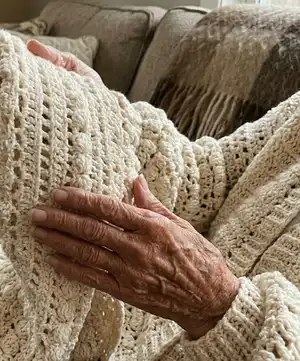
White Lace Sweater Pattern crochet pattern - detailed view of completed project

The sweater is worked in cotton-linen yarn for breathable structure and soft drape. Measurements and size adjustments are included so you can size up or down as needed.

Why You'll Love This White Lace Sweater Pattern

I absolutely love this pattern because it balances delicate lace with a cozy silhouette that works across seasons. I enjoy how the puff stitches and open arches create a feminine texture without adding heaviness. I love offering clear, repeatable rounds that make shaping predictable and satisfying to crochet. I am passionate about approachable designs that let you customize yarn and size while keeping the construction straightforward.

White Lace Sweater Pattern step 1 - construction progress White Lace Sweater Pattern step 2 - assembly progress White Lace Sweater Pattern step 3 - details and accessories White Lace Sweater Pattern step 4 - final assembly and finishing

Switch Things Up

I love how easy it is to customise this sweater by changing yarn or hook size; try a softer, thicker cotton for a chunkier look.

I often switch the sleeve length to make a 3/4 sleeve by reducing rounds before the ribbing for a more versatile piece.

Try different colors or ombre effects by changing yarn color every few rounds β€” the lace pattern really highlights color shifts.

I sometimes replace puff stitches with clusters of trebles for a different texture that still reads as lace.

For a cropped version, reduce the number of body rounds and keep the same ribbing instructions for a modern silhouette.

If you want a looser fit, add the extra 2 sizing rounds the pattern mentions before decreases on each of the four main parts.

I like to add small buttons or a ribbon at the neck for a decorative closure; you can embroider small motifs on the front as well.

To make this sweater warmer, use a wool-cotton blend and slightly smaller hook to tighten the fabric while keeping the lace design.

Try adding contrast edging by switching to a slightly darker color for the ribbing and neck edging for a chic look.

When making a child's version, reduce the initial chain counts proportionally and test fit as you go β€” it’s a great way to create matching family sweaters.

Common Mistakes & How to Fix Them

βœ— Skipping the gauge check before starting can lead to a sweater that is too large or too small; make a 4''/10 cm gauge swatch with the recommended hook and yarn and adjust the hook size as needed. βœ— Not hiding ends before assembly makes finishing awkward and bulky at seams; leave long tails and weave or hide ends prior to sewing the panels together for a neat result. βœ— Sewing parts without pinning or matching stitch counts causes uneven seams and misaligned shoulders; pin pieces carefully following the layout and count stitches before sewing. βœ— Pulling the yarn too tight while working ribbing or edging can distort the shape of the opening; maintain a relaxed, consistent tension and try edging on a scrap if unsure. βœ— Skipping stitch markers during rounds with repeats may cause you to lose the beginning of rounds; place a marker at the start of each round and move it as you join.

White Lace Sweater Pattern

Create a breezy White Lace Sweater with delicate lace panels and voluminous sleeves. This pattern guides you step-by-step through crocheting front and back panels, roomy sleeves, ribbed edges and finishing touches. You will love the relaxed fit and the cotton-linen texture that makes this sweater perfect for layering. The instructions include materials, rounds, and assembly notes to make the process smooth and enjoyable.

Intermediate 12-15 Hours

Materials Needed for White Lace Sweater Pattern

β€” Main Fabric

  • 01
    CotLin YARN (70% Tanguis Cotton, 30% Linen) - main yarn used for project
  • 02
    Total yardage approximately 1950-2000 yards (1800 m)
  • 03
    Swan yarn equivalent - 16 balls (as used for sample)
  • 04
    Alternative: Paintbox Yarns Cotton DK (similar weight and yardage) - optional

β€” Tools Required

  • 01
    Crochet hook 4.5 mm (#7)
  • 02
    Tapestry/yarn needle for sewing and weaving ends
  • 03
    Scissors
  • 04
    Stitch markers
  • 05
    Measuring tape
  • 06
    Pins for blocking and positioning pieces
  • 07
    Optional: blocking mats and pins

Progress Tracker

0% Complete

β€” Main parts :

Info :

There are instructions for front and back parts. Each one has 40 rounds. You can add extra 2 rounds for sizing up before decrease rounds.

β€” Front part :

Info :

Front part - 2 pieces. Crochet ch-43 + ch-3 (counts as 1st dc in the R1)

Round 1 :

43 dc in each st starting with the 4th st (44 st)

Round 2-23 :

ch-3 (counts as 1st dc), 43 dc in each of st (44 st)

Round 24 :

ch-3 (counts as 1st dc), dc2tog (dec), 41 dc (43 st)

Round 25 :

ch-3 (counts as 1st dc), 40 dc in each of st, dc2tog (dec) (42 st)

Round 26 :

ch-3 (counts as 1st dc), dc2tog (dec), 39 dc (41 st)

Round 27 :

ch-3 (counts as 1st dc), 38 dc in each of st, dc2tog (dec) (40 st)

Round 28 :

ch-3 (counts as 1st dc), dc2tog (dec), 37 dc (39 st)

Round 29 :

ch-3 (counts as 1st dc), 36 dc in each of st, dc2tog (dec) (38 st)

Round 30 :

ch-3 (counts as 1st dc), dc2tog (dec), 35 dc (37 st)

Round 31 :

ch-3 (counts as 1st dc), 34 dc in each of st, dc2tog (dec) (36 st)

Round 32 :

ch-3 (counts as 1st dc), dc2tog (dec), 33 dc (35 st)

Round 33 :

ch-3 (counts as 1st dc), 32 dc in each of st, dc2tog (dec) (34 st)

Round 34 :

ch-3 (counts as 1st dc), dc2tog (dec), 31 dc (33 st)

Round 35 :

ch-3 (counts as 1st dc), 30 dc in each of st, dc2tog (dec) (32 st)

Round 36 :

ch-3 (counts as 1st dc), dc2tog (dec), 29 dc (31 st)

Round 37 :

ch-3 (counts as 1st dc), 28 dc in each of st, dc2tog (dec) (30 st)

Round 38 :

ch-3 (counts as 1st dc), dc2tog (dec), 27 dc (29 st)

Round 39 :

ch-3 (counts as 1st dc), 26 dc in each of st, dc2tog (dec) (28 st)

Round 40 :

ch-3 (counts as 1st dc), dc2tog (dec), 25 dc (27 st), fasten off.

β€” Back part :

Info :

Back part - 2 pieces. Crochet ch-43 + ch-3 (counts as 1st dc in the R1)

Round 1 :

43 dc in each st starting with the 4th st, sl st to join (44 st)

Round 2-37 :

ch-3 (counts as 1st dc), 43 dc in each of st (44 st)

Round 38 :

ch-3 (counts as 1st dc), 27 dc in each of st, dc2tog (dec), sk the rest sts, turn (29 st)

Round 39 :

ch-3 (counts as 1st dc), dc2tog (dec), 26 dc (28 st)

Round 40 :

ch-3 (counts as 1st dc), 25 dc in each of st, dc2tog (dec) (27 st), fasten off.

Info :

Sew together (follow the layout) 2 front parts with sc on the right side. The same way sew the back parts. Then sew the front part and the back part in the shoulder areas and underarms, leaving the opening for sleeves.

β€” Sleeves :

Info :

Crochet 2 sleeve parts. Crochet ch-108 for each sleeve tube.

Round 1 :

ch-3 (counts as 1st dc), 1 dc in in 4th st from the hook, 1 dc in each of next sts (108 st)

Round 2 :

ch-3 (counts as 1st dc), ch-1, sk 1 st, 1 dc, (ch-1, sk 1 st, 1 dc) repeat to the end of the round (108 st)

Round 3 :

ch-3 (counts as 1st dc), 1 dc in each of next sts (108 st)

Round 4 :

ch-1, 1 sc in the top of 3-ch of previous round, (ch-2, sk 2 sts, (1 dc, ch-2, 1 dc) in next st, ch-2, sk 2 sts, 1 sc in next st) repeat to the end.

Round 5 :

ch-3 (counts as dc), 1 puff-cluster into each of the next top 2ch-sp - (3 puff sts in the 2-ch-sp bw 2 dc of the ark of the previous round), 1 dc in last st.

Note :

see instructions for "Puff st" in Abbreviations (last page)

Round 6 :

ch-3 (counts as 1st dc), (ch-1, sk puff st, 1 dc) repeat to the end.

Round 7 :

the same as R-3

Info :

Repeat the Rounds R2-R7, finish with the R-39.

Info :

Fold the sleeve as shown on the layout and sew together with single crochet on the wrong side.

β€” Ribbing on sleeves :

Info :

Work by the circle rounds, sl st to join at the end.

Round 1 :

join the tread, ch3 (doesn’t count as dc), (dc2tog in each 2 sts of previous round to decrease) repeat until the end of the round, sl st to join into the 3rd st of 3ch- at the beg.

Round 2 :

Ch 3 (doesn’t count as dc), (1 fpdc, 1 bpdc) repeat until the end of the row, sl st to join.

Round 3 - 4 :

Do the same as R2.

Round 5 :

Make edging - ((sc, ch3, sc) in the next st, sk 1 st) repeat to the end, fasten off.

β€” Join and finish :

Info :

Attach sleeves to the openings in the main part with sc on the wrong side.

Info :

Make ribbing on the bottom of the sweater. Work by the circle.

Round 1 :

join the tread, ch3 (doesn’t count as dc), (dc2tog in each 2 sts of previous round to decrease, 2 dc in each of next sts) repeat until the end of the round, sl st to join into the 3rd st of 3ch- at the beg.

Round 2 :

Ch 3 (doesn’t count as dc), (1 fpdc, 1 bpdc) repeat until the end of the row, sl st to join.

Round 3 - 4 :

Do the same as R2.

Info :

Make edging around the neck area as you did on the sleeve edges. Weave the ends.

Info :

Thank you for following my instructions. Please feel free to correct me so I could perform better next time and make current tutorial more easy to follow. I wish you enjoy working under this project.

Assembly Instructions

  • Sew together the 2 front parts with single crochet on the right side, aligning rounds and edges following the layout diagram.
  • Sew the 2 back parts in the same way, then join front and back at the shoulder areas and underarms, leaving openings for the sleeves.
  • Fold each sleeve tube following the layout and sew together with single crochet on the wrong side to make a sleeve cylinder.
  • Attach sleeves to the openings in the main part with single crochet on the wrong side, matching seam lines and easing fullness.
  • Make ribbing on the bottom by working in the round, then add edging around the neck as done on sleeve edges and weave in all ends.

Important Notes

  • πŸ’‘This pattern is written in US terms; follow the abbreviation table for stitch definitions and the puff stitch explanation.
  • πŸ’‘Hide and weave in ends before final assembly; leave long tails to make sewing easier and neater.
  • πŸ’‘Check your gauge (16 st = 4'' on 4.5 mm hook) before starting so the finished measurements match the pattern.

This White Lace Sweater pattern brings effortless coastal charm to your wardrobe with soft cotton-linen yarn and airy lace panels. The roomy sleeves and decorative edging add a handmade, stylish touch. Perfect for gifts or summer evenings, this sweater is a satisfying project to crochet and wear. 🧢✨

You ask,

we answer.

FAQs

What size will the finished piece be?

The original sample size is S with 56 cm chest width; measurements shown: length 44 cm + 2.5 cm ribbing, sleeve length 48 cm + 4 cm ribbing. Size adjustments for XS, M, L, XL are provided in the pattern.

Can I use different yarn weights for this pattern?

Yes, but changing yarn weight will alter the final size and drape; always make a gauge swatch and adjust hook size and stitch counts accordingly.

Do I need prior crochet experience for this pattern?

This pattern is rated intermediate and uses double crochet, puff clusters, front/back post stitches and shaping, so familiarity with these stitches is recommended.

How long does this project typically take to complete?

Most crocheters will finish this project in 12-15 hours depending on experience, customization and assembly time.