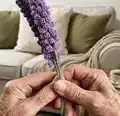
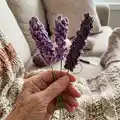
🧢 Beautiful ✨ Detailed πŸ’ Adorable

Lavender plant Crochet Pattern

Lavender plant Crochet Pattern
4.1β˜… Rating
1-2 Hours Time Needed
4.0K Made This
βœ‚οΈ

Beginner Friendly Level

Perfect for those just starting their crochet journey, with clear instructions and simple techniques

⏱️

Quick Make

Complete in under 2 hoursβ€”lightning fast fun for instant gratification and quick gifts.

🏑

Cozy Accent

A warm touch for your space that transforms ordinary corners into inviting nooks filled with handmade charm.

About This Lavender plant Crochet Pattern

This pattern teaches you to crochet a single lavender flowerhead using DK weight yarn and basic stitches. The finished piece is lightweight and ideal for making bouquets or decorative stems. The instructions include assembly steps to add a flower wire stem so your lavender stays upright and posable.
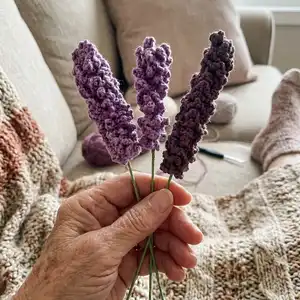
Lavender plant Crochet Pattern crochet pattern - detailed view of completed project

Designed for confident beginners, the pattern uses only chains, slip stitches and single crochet. Clear photos and a short written tutorial guide you through every stage.

Why You'll Love This Lavender plant Crochet Pattern

I absolutely love this pattern because it turns simple stitches into a beautiful, botanical accent that looks much more complex than it is. I enjoy that it uses minimal yarn yet creates a charming textured flowerhead you can group into bouquets. The assembly with flower wire makes the stems usable in real floral arrangements or craft projects, which I find really satisfying. I also love giving these as small handmade gifts because they are quick to make and always brighten someones day.

Lavender plant Crochet Pattern step 1 - construction progress Lavender plant Crochet Pattern step 2 - assembly progress Lavender plant Crochet Pattern step 3 - details and accessories Lavender plant Crochet Pattern step 4 - final assembly and finishing

Switch Things Up

I love customizing this pattern by changing colors; try pale lilac, deep purple, or variegated yarn for different looks.

I often make the chain longer or shorter to create bigger or smaller flowerheads depending on the size I need.

Using a thicker DK or light worsted yarn with a larger hook makes a chunkier, more dramatic lavender head that works well in rustic bouquets.

For tiny posable stems, use fingering weight yarn and a smaller hook to create miniature lavender perfect for crafts or doll displays.

I like to wrap multiple stems together with floral tape to create a fuller bunch for vases or gift bundles.

Try adding tiny beads or French knot embroidery to the flowerhead for a sparkly or textured focal point.

Use green or brown floral wire for the stem to match real plant tones, or wrap the wire with floral tape for a polished finish.

I sometimes attach felt leaves to the stem below the flowerhead for extra realism and a layered effect.

If you want a frosted look, lightly spray the finished stems with craft glue and sprinkle fine glitter for a seasonal variation.

I recommend making several stems in matching or complementary shades and arranging them in a small mason jar for a quick and charming gift.

Common Mistakes & How to Fix Them

βœ— Skipping the correct chain count at the start leads to an incorrect foundation length; recount your starting chain and ensure you chain 50 before continuing. βœ— Not working on the opposite side of the chain after the first pass will prevent the flowerhead forming correctly; follow the instruction to work back along the opposite side of the chain. βœ— Fastening off without leaving a long tail makes assembly with the wire difficult; cut yarn but leave a long tail for sewing over the bent wire end securely. βœ— Feeding the wire incorrectly through the row 1 sc stitches can cause the flower to slip off; go in one stitch and out the next and bend the wire tip before securing it.
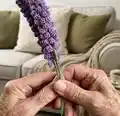
Lavender plant Crochet Pattern

Create a delicate, realistic lavender flowerhead using simple crochet stitches and DK yarn. This pattern is perfect for adding a handmade botanical touch to your home or gifts. You'll work a small chain, build textured flower loops, and finish with a floral wire stem for posability. Clear step-by-step instructions make this a quick and satisfying project you can complete in an afternoon.

Beginner Friendly 1-2 Hours

Materials Needed for Lavender plant Crochet Pattern

β€” Main Fabric

  • 01
    DK (size 3) yarn - approximately 10 g purple shade (main color for lavender flowerhead)
  • 02
    Note: You can use different yarn weight for this project but adjust hook size accordingly

β€” Tools Required

  • 01
    3.5 mm crochet hook
  • 02
    Yarn needle
  • 03
    Scissors
  • 04
    Flower wire for the stem
  • 05
    Small amount of tape to secure the stem

Progress Tracker

0% Complete

β€” Lavender plant :

Info :

With purple yarn.

Info :

Start by creating a slip knot and chain 50.

Round 1 :

Skip one from the hook, sc into each chain until one chain remains. Sc 5, slst into the final chain.

Info :

You will now be working on the opposite side of the chain.

Round 2 :

*ch 6, sc into the next stitch*, repeat from * to * until the end of the row, ch 6, sc into the opposite side of your work and repeat from * to * on the other side until you reach the first ch-6, slst and fasten off. Cut yarn but leave a long tail.

β€” Assembly :

Info :

From the top end (where you finished your crocheting), start feeding the flower wire through the row 1 sc stitches, going in one and out next.

Info :

Bend the top part of the wire so that your plant will not pop out of the top.

Info :

Using the end tail of your yarn, sew over the bent end of the wire a few times to keep it in place.

Info :

Push and twist the flowerhead towards the top. To finish off, add a little bit of tape to the stem just below the flowerhead to keep it in place.

Info :

Happy crocheting!

Assembly Instructions

  • Feed the flower wire through the row 1 sc stitches from the top end, inserting the wire in one stitch and out the next to anchor the wire inside the flowerhead.
  • Bend the top tip of the wire inward so the wire cannot slip through the stitches and the flowerhead will stay secured at the top.
  • Using the long tail left when fastening off, sew over the bent end of the wire several times with a yarn needle to secure it in place.
  • Push and twist the crocheted flowerhead toward the top of the wire to create a finished look and hide the bent wire end.
  • Wrap a small piece of tape around the stem just below the flowerhead to further secure the flowerhead and give a neat finish.

Important Notes

  • πŸ’‘Gauge/tension is not important for this pattern as long as your stitches are tight and without gaps; adjust hook size if necessary.
  • πŸ’‘If you struggle getting tight enough stitches, try a smaller hook to achieve a firmer fabric and better stitch definition.
  • πŸ’‘You can use a different type or weight of yarn for this project but choose a suitable hook size to match your yarn.
  • πŸ’‘Cut the yarn but leave a long tail after fastening off so you have enough length to sew and secure the bent wire end.

This charming lavender plant pattern makes delightful botanical decor you can craft again and again. Create single stems or bunches for a handmade bouquet to brighten any room. Perfect for gifts, displays, or craft projects β€” quick to make and endlessly lovely. 🌿🧢

You ask,

we answer.

FAQs

What size will the finished piece be?

The finished lavender head measures approximately a few inches long when made with DK yarn and a 3.5 mm hook; exact size varies with yarn and tension.

Can I use different yarn weights for this pattern?

Yes, you can use different yarn weights but this will change the final size; choose a hook appropriate for your yarn and expect a larger or smaller flowerhead.

Do I need prior crochet experience for this pattern?

This pattern is rated beginner friendly, so basic knowledge of chain, single crochet and slip stitch is recommended to follow the instructions comfortably.

How long does this project typically take to complete?

Most makers complete a single lavender stem in under two hours, though time may vary based on experience level and how many stems you make.