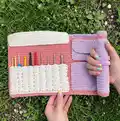
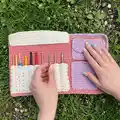
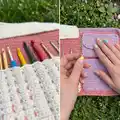
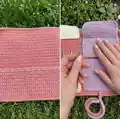
About This Crochet Hook Holder Pattern
This easy-to-follow pattern creates a foldable crochet hook holder with multiple pockets for hooks and small tools. It includes pocket sizing for various hook types, a protective flap, and a secure closure loop and strap. The pattern uses simple single crochet rows and sewing to assemble the finished organizer.
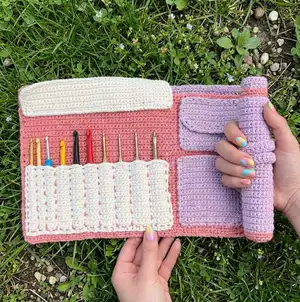
Worked flat in separate pieces, then sewn together, this project is ideal for using cotton yarn scraps. Photos and finishing notes help you position pockets and add snap fasteners if desired.
Why You'll Love This Crochet Hook Holder Pattern
I absolutely love this pattern because it transforms simple yarn into a highly functional and beautiful tool organizer that I actually use every day. I enjoy how customizable it is — you can change colors, pocket sizes, and closures to suit your preferences. It is satisfying to sew the pieces together and see the hook holder take shape into a tidy, portable roll. The pattern uses approachable stitches, so I can relax while making something practical and giftable.
Switch Things Up
I like changing the color layout to match my yarn stash, switching pocket colors to create a striped or ombre effect for a fresh look.
I sometimes use a bulkier cotton yarn and a larger hook to make a chunkier, more padded holder for larger hooks and comfort.
I also make mini versions with thinner cotton or fingering weight yarn to create keychain-sized holders for travel or gifting.
I add a fabric lining to pockets for added stability and a cleaner interior finish when I want a more durable piece.
I swap the snap fastener for a button and loop closure for a handmade vintage vibe and easy one-handed opening.
I embroider initials or small motifs on the outer layer to personalize gifts or mark which set belongs to whom.
I add a zippered pocket instead of a flap pocket when I need secure storage for small notions like stitch markers and tapestry needles.
I adjust pocket heights and the number of hook separators based on the brands of hooks I own, making deeper pockets for Tunisian hooks.
I sometimes insert a thin piece of felt or soft interfacing behind the hook pocket for extra protection and structure.
I create coordinated sets by matching a yarn bowl cozy or project bag to the hook holder for matching tool storage.
I experiment with different closures like elastic loops, magnetic snaps, or toggles to see which is fastest and most secure for my workflow.
I recommend testing hook spacing with real hooks before sewing separators so you can easily customize the fit for your preferred hook lineup.
Common Mistakes & How to Fix Them
✗ Skipping the second chain when starting rows can alter stitch count and width; always begin from the 2nd ch from the hook as instructed.
✗ Not counting stitches after the first row leads to mismatched pocket widths later on; count your stitches at the end of R1 to confirm you have the correct number.
✗ Sewing pockets without testing hook placement can result in misaligned separators; insert your tallest hook to mark where to sew the protector flap and separators before stitching.
✗ Using inconsistent tension creates uneven rows and pocket edges; maintain steady tension and check gauge to ensure final piece dimensions match.
✗ Forgetting to fasten off and weave ends neatly can make assembly messy and unstable; fasten off each piece and weave in ends before sewing layers together.