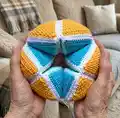
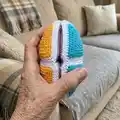
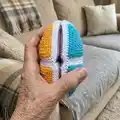
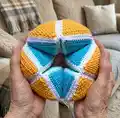
About This Crochet Flexagon Amigurumi Pattern
This pattern creates a colorful crochet flexagon made from small equilateral triangles joined into pyramids and assembled into a twistable toy. The design uses simple single crochet shaping and basic decreases to form each triangle, then finishes with a neat white edge for contrast. You will learn an organised sewing method to join pieces into pyramids and assemble the final flexagon.
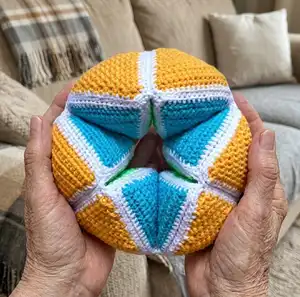
Perfect for crafters who enjoy small modular projects and hand-sewing assembly. The finished toy measures about 15 cm using the recommended yarn and hook.
Why You'll Love This Crochet Flexagon Amigurumi Pattern
I absolutely love this pattern because it turns simple triangle motifs into a playful, interactive toy that invites fidgeting and discovery. I enjoy how predictable stitch shaping makes the triangles quick and meditative to crochet, while the final assembly brings a satisfying puzzle-like finish. The bright color combinations give the flexagon personality and make it a joyful handmade gift. Sewing the pyramids together is relaxing for me, and watching the finished toy flip and transform always feels rewarding.
Switch Things Up
I love customizing the color layout for each project: try pastel shades for a soft, baby-friendly version or bold neons for a modern, eye-catching look.
I often change yarn weight and hook size to create different sizes — using a DK or aran weight yarn with a larger hook gives you a chunkier flexagon.
I like to swap the white edge for a contrasting color to soften or intensify the overall palette; try a dark edge for a graphic finish.
Try embroidering small motifs on the triangle faces before assembling to personalize each segment.
For a keychain or mini version, use fingering weight yarn and a smaller hook to scale the pattern down significantly.
If you want a heavier, more stable piece, add a bit of poly-pellet or a small weight into the stuffing near the base of the pyramids.
I sometimes add ribbon loops or small tags between seams to attach charms or labels for gifts.
Experiment with textured stitches on the triangle faces (like alternating hdc or front-post rows) to give tactile interest.
You can join the triangles with visible decorative stitching instead of the hidden half cross seam for a rustic, hand-stitched look.
I recommend testing one pyramid assembly first before committing to all pieces so you can adjust tension, stuffing, and seam style to your preference.
Common Mistakes & How to Fix Them
✗ Not tracking stitch counts during row shaping leads to incorrect triangle shaping; count stitches after each row and mark rows as you complete them to stay accurate.
✗ Inconsistent tension across triangles creates uneven pyramid seams; maintain even, relaxed tension and try to crochet all triangles in one sitting or with the same hand tension.
✗ Skipping the white edging or sewing it carelessly produces a messy finish; attach the white thread carefully and work SC evenly along the edge, placing 3 SC at each top.
✗ Overfilling or underfilling pyramids affects the final flexagon shape; stuff gradually while assembling and aim for firm but flexible stuffing for best movement.
✗ Using a different decrease method than described can change the stitch count and shape; follow the specified single crochet decrease technique to keep rows matching the pattern.